
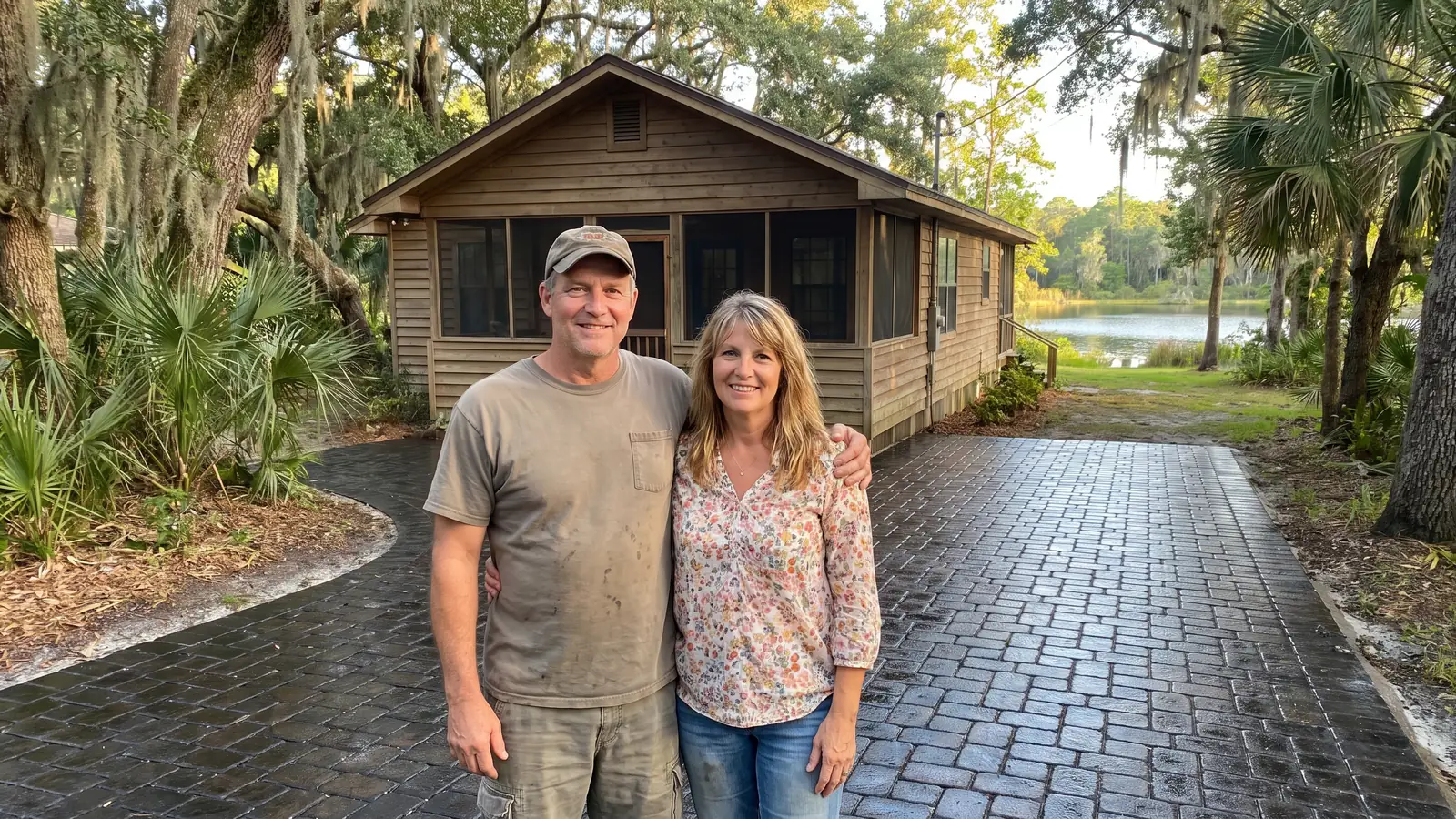
Paver sealing for Argyle Forest homes
Paver Sealing in Argyle Forest, FL
Argyle Forest sits on flat, slow-draining sand by the Clay County line; call (904) 736-3472 for a free sealing estimate.
- Brings out deeper paver color
- Fresh joint sand helps lock pavers in place
- Gives weeds less room to grow
- Makes the surface easier to keep clean
- Free estimate, no obligation
Request a Free Estimate
Free, no obligation.
Fast, careful paver sealing in Argyle Forest
Argyle Forest homeowners can get paver sealing priced at no charge, with a reply inside 1 business day and often much sooner. The contractor who comes out cleans, re-sands and seals driveways, walks, pool decks and lanai floors anywhere from Plum Tree to Argyle East Village. Use ask for your free estimate to start.
Think about the strip of driveway nearest the street, where gray has taken over and weeds stand in the joints. After a wash, new sand and a coat, that strip matches the rest again. Call (904) 736-3472 to describe yours.
Why hire a local paver sealing contractor in Argyle Forest?
Argyle Forest went up in stages from 1981 to 2003, so the pavers on one street can be a decade older than the next. A local contractor sorts that out at the first visit, and you can ask for your free estimate to book it.
See it before you pay
Someone walks your Argyle Forest driveway or lanai and quotes a price. Nothing is owed for that visit.
A reply inside a day
Send a request and a local contractor answers within 1 business day, often sooner.
A number to measure against
Regional shops post $1.75 to $3.25 per square foot for the whole job, so any bid here can be checked.
Quiet or glossy
Matte blends into a street full of 1990 houses. Wet look pops more, but it scuffs sooner under daily tires.
Get Your Free Estimate in Argyle Forest
Tell us about your pavers in Argyle Forest.
Free, no obligation
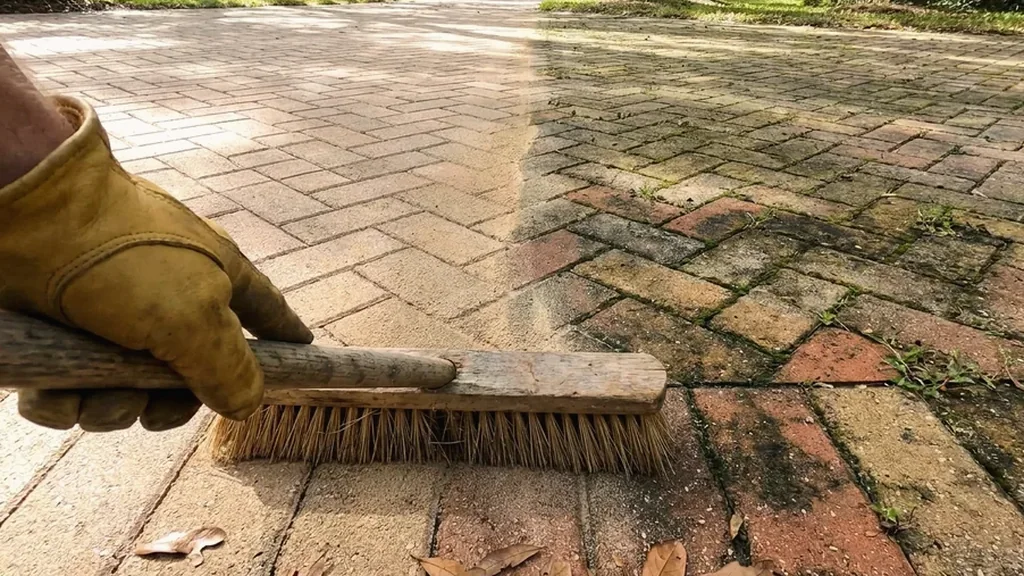
What paver problems show up most in Argyle Forest?
Water that has nowhere to go
The USDA Pottsburg soil series, first described in Duval County, is fine sand on flats with little runoff and a water table that can sit 0 to 24 inches down. Duval County also takes about 52 inches of rain a year, mostly between May and September. On flat Argyle Forest lots, a wet driveway edge may stay damp for days. Pavers that stay damp grow algae and lose joint sand sooner. Rain that falls on a flat lot has little slope to follow, so it lingers at driveway edges. You may have seen a puddle outlast an afternoon of sun. The same slow drying shows up on shaded patios and lanai floors, so mention those at the first visit. A good habit is to look at the pavers the morning after a big storm and note where puddles remain by noon. Those spots tell the contractor where to look first.
Joint sand that heavy rain pulls out
A landscape trade group says heavy rain can wash out joint sand, and that lost sand lets joints widen so weeds take hold. Summer downpours in Duval County are often brief but intense. Pavers laid around 1990 have been through decades of them. If your joints look thin or hollow, expect fresh sand to be a big part of the job. Thin joints also let pavers rock a little under tires, and a rocking paver chips at the corners. Fresh sand is the least costly fix. It goes in before any coat, so the sealer lands on a steady surface. If a street was built in the late 1980s, its pavers have been through a great many summers of this. Tired joints are the normal result, not a sign of poor work.
Pavers that were added to houses at different times
Argyle Forest homes on the tax roll were built from 1981 to 2003, with a median year of 1990. Plum Tree homes run from the late 1980s into the 2010s, and Candlewood has 202 homes from 1979 into the 1990s. Owners added pavers whenever they got around to it. One street can hold several ages and several unknown sealers. Plum Tree homes run into the 2010s while Candlewood starts in 1979, so decades can sit within a short drive of each other. That is why the contractor asks when your house went up. A leftover coat from the 1990s looks different from a recent one. Ask your neighbors what they used, since one builder or installer often worked a whole section. A shared answer can save a test patch.
Damp edges beside small lakes
A real estate page says some Plum Tree homesites back onto small internal lakes. Ground near water stays moist, and the same trade group says algae shows up on pavers that remain damp and shaded. Look for a green film along the paver edge nearest the water. It must be washed off before any coat goes on. Algae likes shade and moisture together. A shaded edge facing the water is the usual spot, and it often shows first on the lowest course of pavers. Washing it off is simple, but sealer has to wait until the edge dries. A green film beside the water is a surface problem, not a structural one. It washes off, but it comes back if the edge stays wet.
Soft edges near downspouts
The landscape trade group notes that settlement can occur near downspouts. On a flat lot, roof water that lands on the same strip of pavers day after day can wash sand from under the edge. A sunken spot then holds water and grows moss. One Jacksonville company says sealing preserves a sunken section, so it should be reset before sealing. Where a downspout empties onto a path, sand can wash out from under the edge row, and the paver tips. Moving the water away is a small job that protects any repair. Ask the contractor if an extension makes sense for your roofline. Settling near a downspout is slow, so you may not notice it until the dip holds a puddle. Look for a ring of moss around the low spot.
Which Argyle Forest neighborhoods have paver rules to check first?
Start with your association, since many Argyle Forest streets have one. Plum Tree is governed by the Plum Tree Homeowners Association, and the Chimney Lakes homes in one listings sample reported an HOA. Florida law lets an association review how an improvement looks only as far as its declaration or published guidelines allow. Read yours, then ask for your free estimate with questions.
Plum Tree sits off 103rd Street and has some homesites that back onto small lakes. Chimney Lakes homes date from 1986 to 2005, and its listings name tennis courts, a playground and a jogging path. Argyle Corners has homes built as late as 1991, and nearby Candlewood has 202 homes. Say which of the three is your street when you call (904) 736-3472.
Argyle East Village is where Argyle Forest Park sits, at 8533 Acanthus Drive. Street by street, the pavers around those homes were laid when each section was built or when an owner later added them. Matching an old finish is easier when the contractor knows the section. Mention your street when you ask for your free estimate.
What does paver sealing cost in Argyle Forest?
Shops across the region post $1.75 to $3.25 per square foot for the wash, the sand and the sealer. On an Argyle Forest lot the exact number turns on lost joint sand, green film and any old coat of unknown type. A figure for your driveway is one ask for your free estimate away.
Size and access shift the total. A long two-car apron costs more than a short walk, and a screened lanai takes careful hand work. Sunken edges need repair before the first wash. Call (904) 736-3472 to learn which of these fit.
| Paved area | Typical example | Clean, sand and seal |
|---|---|---|
| 300 sq ft | Small patio or walkway | $525 to $975 |
| 600 sq ft | Two car driveway | $1,050 to $1,950 |
| 1,000 sq ft | Large driveway or pool deck | $1,750 to $3,250 |
| 1,500 sq ft | Driveway plus pool deck | $2,625 to $4,875 |
Math based on the $1.75 to $3.25 per square foot that Northeast Florida paver companies publish. Your contractor sets the actual price after seeing the surface. Repairs, leveling and stripping failed sealer are usually extra.
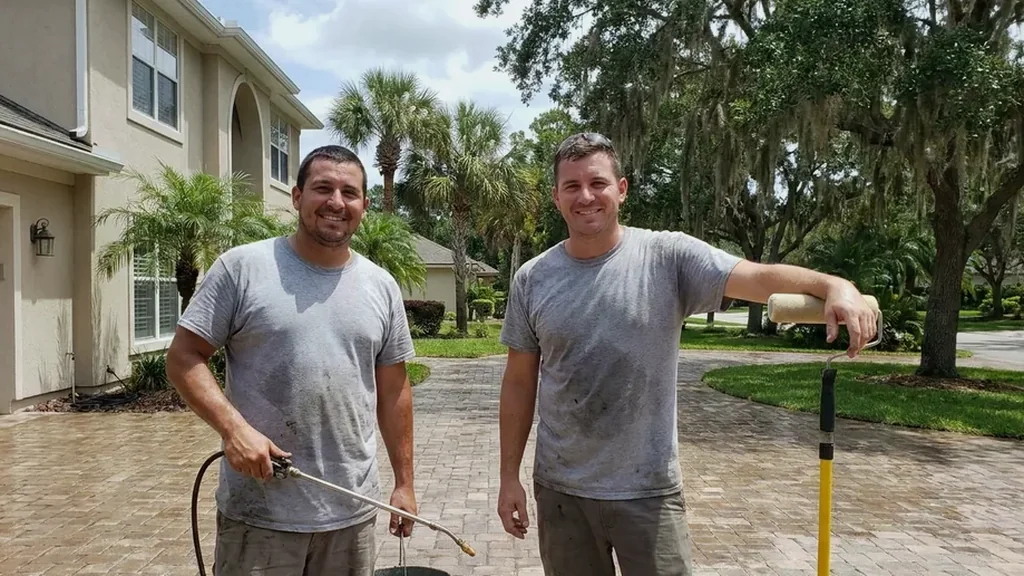
How does a paver sealing job work in Argyle Forest?
Look at how the water leaves
First comes a slow walk around your Argyle Forest pavers. The contractor watches where rain collects, checks the edges by each downspout, and marks any dip. A dip must be reset before sealing, because sealer keeps a sunken spot exactly as it finds it. Say which parts of the lot worry you, such as a corner that never dries. Those notes shape the order of work, and photos of trouble spots stay with the estimate. A short list of questions for the visit helps. Write down what bothers you most about the pavers before the contractor arrives.
Wash decades of grime away
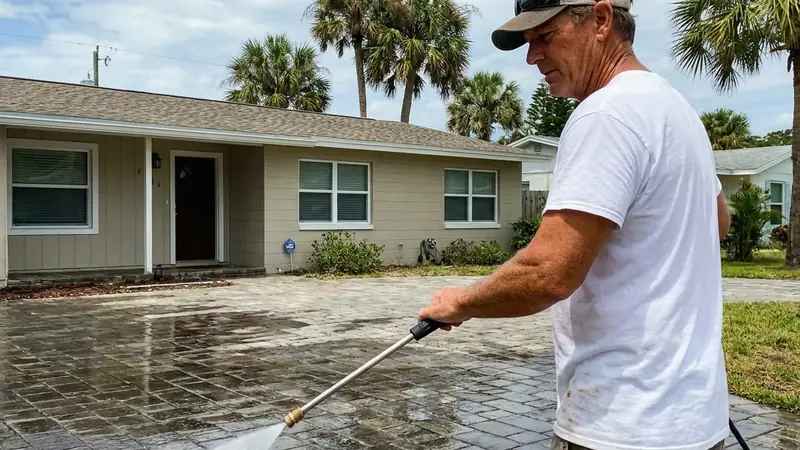
Next the surface gets washed. Green film, oil from the garage and the gray haze left by years of rain come off together. Shrubs, screen frames and pool gear beside the pavers get covered or rinsed with care. Pavers must be bare, since sealer holds whatever is on top. Gray streaks and green patches usually lift in one visit, while old oil can need a second look. A final rinse leaves nothing behind that could dry back onto the surface. Pressure and method are chosen to suit the paver, not just to get it clean fast. Ask what will be used on your surface.
Refill what the rain took
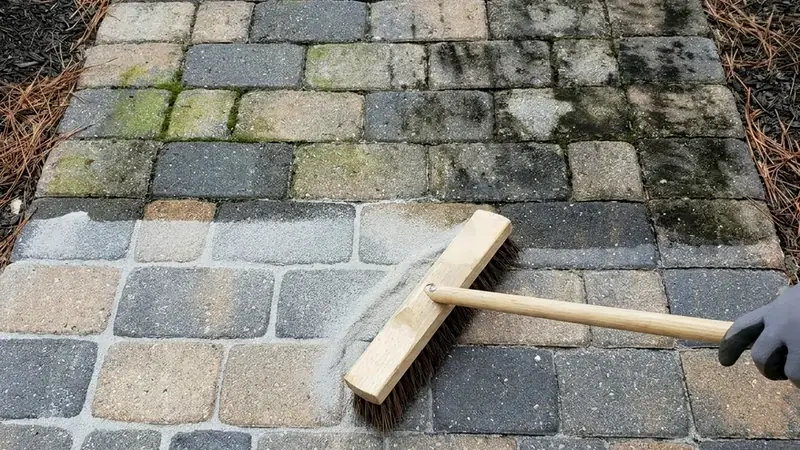
Sand leaves the joints in the wash, so new sand goes back in ahead of the coat. Flat ground and summer downpours have already thinned most joints in this area. Every joint gets topped up, and loose sand is brushed off the surface. Open joints collect water on a flat lot, so this step matters more here than on a slope. Edge rows get extra sand, since that is where it leaves first. Sand type matters too, so ask what goes into your joints. The right fill keeps its shape better than loose, dusty sand.
Give the pavers time to dry
On flat lots the water drains slowly, so this step can take longer than you expect. The contractor feels the joints and reads the forecast. A coat laid over damp pavers is the usual cause of a cloudy finish, so the date may slide a day. If the joints still look dark, the surface is not ready. A day or two of patience costs less than redoing a cloudy coat. If rain is likely, the work is paused rather than rushed. Your date may shift by a day, and a call will tell you.
Roll on the finish
The last step is the sealer, in the finish you picked. Quotes from companies in the area put a coat at two to five years. Water that beads up later tells you the coat is still working, and water that darkens the paver says it is time. Ask the contractor to write down the product name and the finish, then file the note with your house papers. It makes the next coat easy to plan and helps if your association asks. A walk-through at the end shows you the finished surface. Ask about care, and about when to look at the coat again.
Complete paver services in Argyle Forest
Expect four stages at your Argyle Forest home: a wash, a sand refill, a dry-out and the sealer. Green film, oil and years of gray come off first. Sand follows, and sealer closes the job. Call (904) 736-3472 to hear how long each stage runs on your lot.
Argyle Forest driveways take sun, tires and sprinkler overspray, while lanai and pool deck floors take splash and shade. Walkways by a downspout or a small lake stay wet and go green first. Name the surfaces you have when you ask for your free estimate, since each one wears its own way.
Sealer comes in water-based and solvent-based types, with a matte or wet look finish. A house built around 1990 may carry either one, which is why the old coat gets checked first. Wet look deepens color but scuffs sooner. For help choosing, call (904) 736-3472.
Jacksonville gets most of its rain from May to September, and sealer needs a dry surface. On flat, slow-draining ground a shaded paver can stay damp long after a sunny one dries. A careful contractor checks the forecast and the surface before booking. To pick a day, ask for your free estimate.
Questions to ask before you hire
- Which sealer will go on my pavers, and why that one?
- How long do I keep the cars off the driveway after sealing?
- How do you protect my plants, my lights and my pool equipment during the work?
- Will the estimate in writing list the sealer, the number of coats and the area covered?
- Who do I call if the finish looks cloudy or uneven after the job?
- Can you bring back color to pavers that have faded to gray?
- What happens to the weeds and moss growing in my paver joints before you seal?
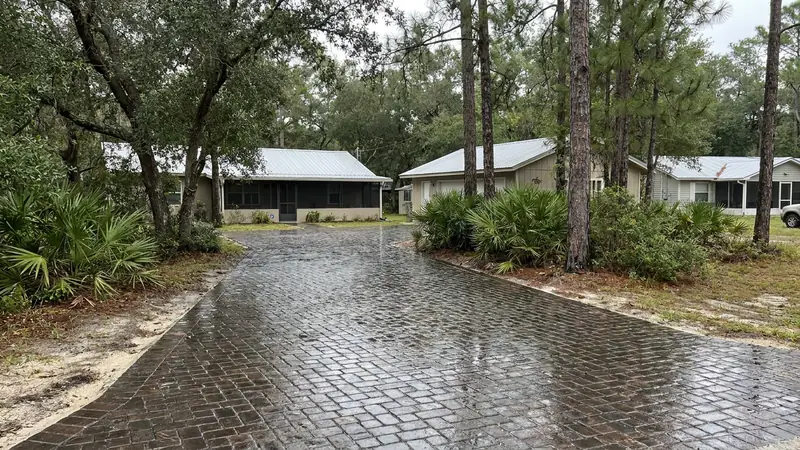
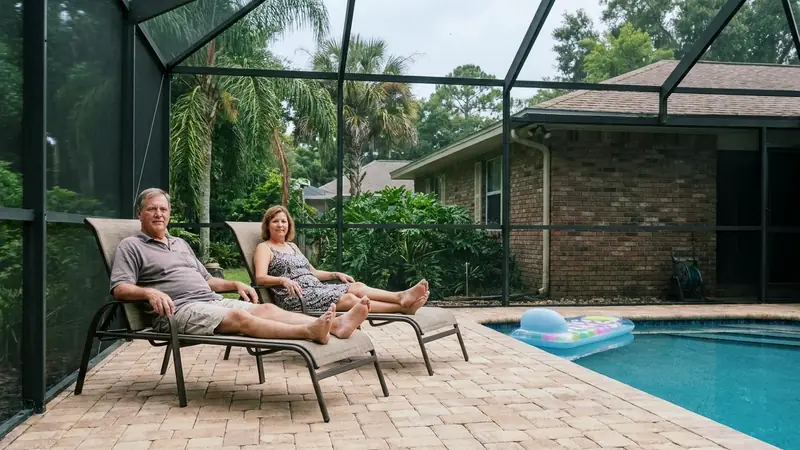
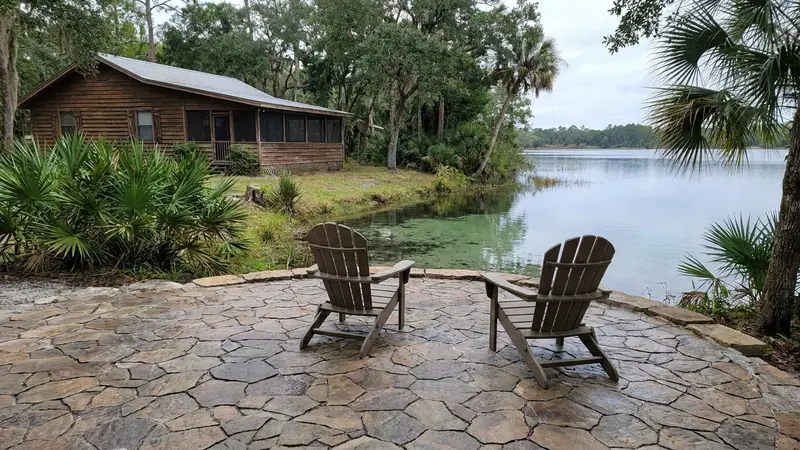
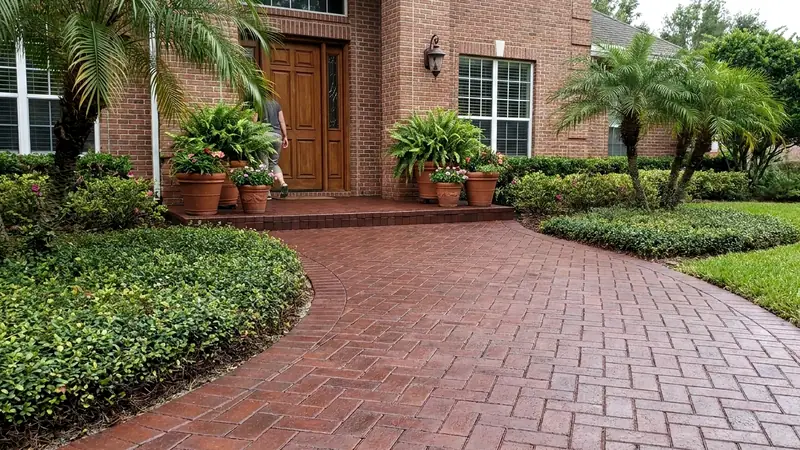
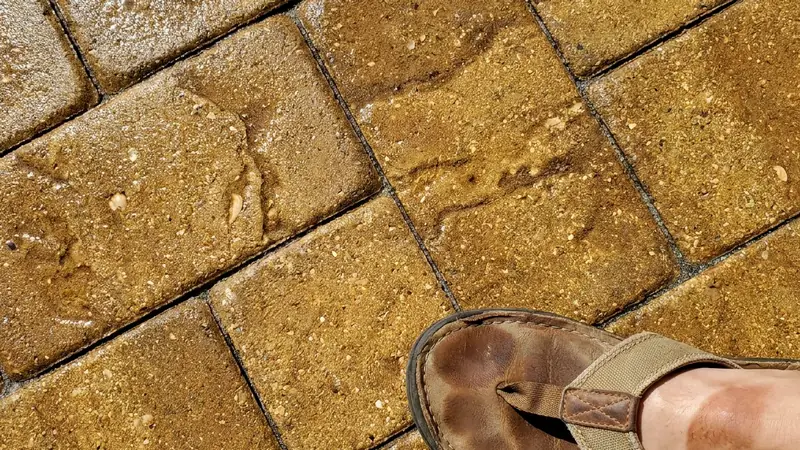
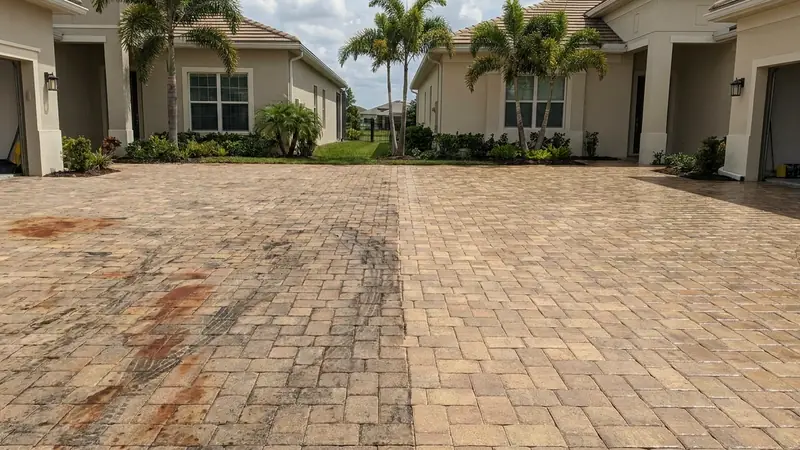
What do sealed pavers look like around Argyle Forest?
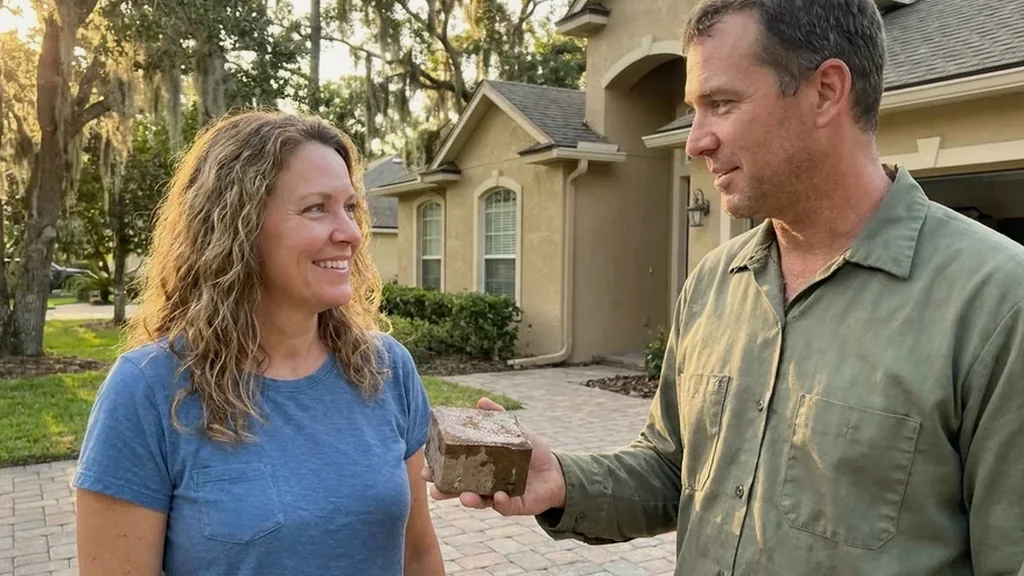
Why local matters in Argyle Forest
Westside contractors know Argyle Forest was built in phases, not all at once. That helps when you describe your pavers, since the age of your house says a lot about what is under your feet. Ask about it when you call (904) 736-3472.
Local knowledge also covers the ground. Flat lots with slow drainage need more care at the wash and the dry-out than a hillside would. A contractor who has watched water sit on pavers in this part of Jacksonville plans for it. To hear how, ask for your free estimate.
Rules matter in an area full of associations. Before picking a color or finish, a local contractor wants to see your guidelines, which saves a repeat visit if the board prefers a different tone. Call (904) 736-3472 and mention your association, with no obligation to hire anyone.
How did Argyle Forest grow into the neighborhoods you see today?
It began as a 1975 plan by Gulfstream Land Development for houses, apartments, stores and offices over 25 years. State regulators approved it as one of the first developments of regional impact in Florida. The plan never took off as expected, and the land split among several owners. Whatever street you are on, ask for your free estimate to ask about your pavers.
Argyle Forest Park at 8533 Acanthus Drive began as a developer-built park, donated to the Argyle Athletic Association in 1988, with much of it passing to the City in 1994. The Argyle Branch library sits on Old Middleburg Road South, and Argyle Village Shopping Center stands at Blanding Boulevard and I-295. If your home is close to one of them, call (904) 736-3472 and name your cross street.
Frequently Asked Questions
Is it good to seal pavers in Argyle Forest?
It is, once joints start thinning. Argyle Forest sits on flat, slow-draining ground, so pavers stay damp and lose sand sooner than they would on a slope. A coat slows that wear, though it needs upkeep and a wet look scuffs before matte. A free look will tell you whether yours are due.
Why is paver sealing so expensive in Argyle Forest?
Because one visit holds four jobs: the wash, the new sand, the drying time and the sealer itself. Shops across the region post $1.75 to $3.25 per square foot for that bundle. Heavy green film and an old unknown coat add hours, which is why two Argyle Forest quotes can differ. Ask that the total area and the number of coats appear on the quote.
Is Argyle Forest in Jacksonville, Florida, or in Clay County?
It is part of Jacksonville, in Duval County, right beside the Clay County line, between Blanding Boulevard and Branan Field-Chaffee Road. Pricing does not change at the county line. Give your street name and the contractor will place the estimate. Both sides get the same steps, so only the address matters for scheduling.
How long does sealer last on pavers in Florida homes like those in Argyle Forest?
Plan on two to five years before the next coat, which is the span shops commonly quote. Shade, daily tires and pool splash push toward the short end. A simple test is water on the surface: beading means the coat still works, and a darkened paver means it is done. Check each spring so you catch wear early.
What do professionals use to seal pavers in Argyle Forest?
Most crews choose between water-based and solvent-based sealer, and whatever is already on your pavers narrows the choice. A Jacksonville company says the usual method is to spray the sealer and then back-roll it into the joints. Get the product name in writing so the next coat is easy to match. Matte and wet look are both common, though your association may lean one way.
How soon can I drive on my Argyle Forest pavers after sealing?
Shoes are usually fine in a few hours, while tires should wait about a day. How long depends on which sealer is used and how the weather behaves. Ask the contractor to name a time for your own product, and keep pets, bikes and wet sprinklers away from the pavers until then.
Will my Argyle Forest association need to approve a sealer color?
Check your own documents first. Under Florida law an association can judge how a change looks only within what its declaration or published guidelines state or reasonably imply. If your papers say nothing about sealer, a short written question to the board is cheap protection. Keep any reply with your paver records.
Can sunken pavers in Argyle Forest be fixed before sealing?
Yes, they should be, since sealer will lock in whatever dip or lift is there. On flat lots the usual cause is roof runoff landing in one spot beside a downspout. Point out low spots at the first visit so the repair comes first and the coat lands on a level surface. Many repairs happen in the same visit as the wash.
Ready for a Free Estimate in Argyle Forest?
Call (904) 736-3472 and tell us about your pavers.
Free, no obligation